KETAMINE THERAPY
What patients should know about ketamine
Ketamine has been used in medicine for many years as an anesthetic medication. More recently, researchers have studied ketamine at carefully controlled, sub-anesthetic doses for its potential effects on depression and other psychiatric conditions.
At Psyche NWA, we use ketamine-based treatments as one potential component of a comprehensive treatment plan for appropriately selected patients.
Glutamate
Works through the NMDA receptor rather than serotonin alone
6 infusions
A commonly studied initial protocol,over roughly two weeks
Off-label
FDA-approved as an anesthetic;psychiatric use is off-label
Supervised
Administered and monitored in the clinic by trained staff
WHY CONSIDER KETAMINE
Ketamine works differently
Depression can be difficult to treat, particularly when symptoms persist despite adequate trials of conventional medications and psychotherapy. Traditional antidepressants work through neurotransmitter systems such as serotonin, and their therapeutic effects often take several weeks to become apparent.
Rather than primarily targeting serotonin, ketamine affects the brain’s glutamate system, particularly through the NMDA receptor.Research suggests this activity triggers downstream processes associated with synaptic plasticity — the brain’s ability to strengthen, modify, and create connections between nerve cells.This may help explain why ketamine can produce relatively rapid changes in depressive symptoms.
Importantly, ketamine is not effective for everyone, and its benefits may be temporary. It should be viewed as a specialized treatment option rather than a cure for depression.
CONDITIONS THAT MAY BE CONSIDERED
Major depressive disorder
Treatment-resistant depression
Anxiety disorders
Post-traumatic stress disorder (PTSD)
Obsessive-compulsive disorder (OCD)
Certain other mood and anxiety-related conditions
The amount and quality of evidence varies substantially among these conditions. Your psychiatric provider will review your individual history and determine whether ketamine treatment is clinically appropriate.
WHAT A TREATMENT LOOKS LIKE
Monitored from the first minute tothe last
01
Prepare
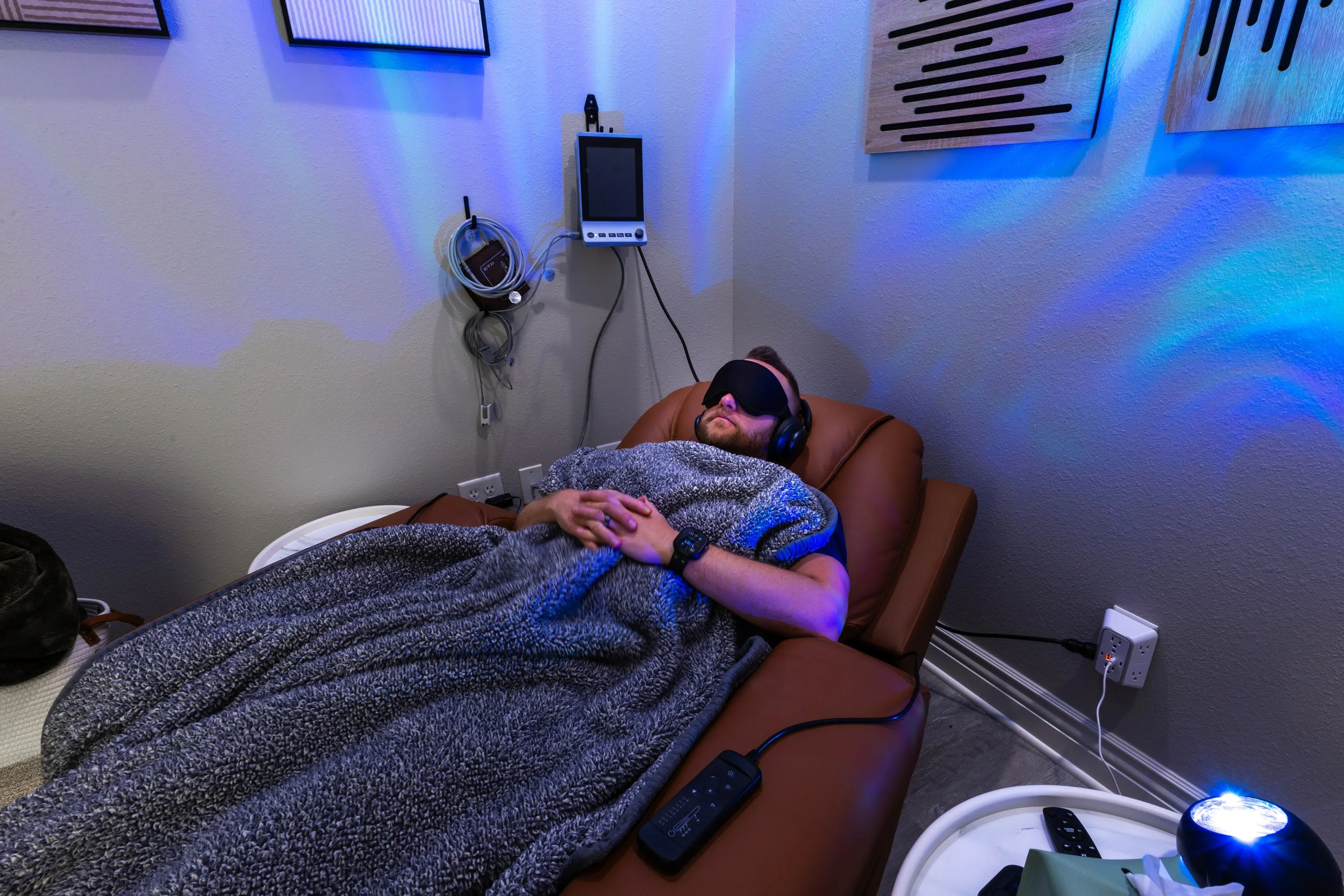
Arrange transportation in advance, follow your provider’s instructions on food, fluids, and medications, and wear comfortable clothing. Eye masks and noise-cancelling headphones are provided.
02
IV placement
A small catheter is placed into a vein in your hand or arm. Ketamine is then administered gradually over the treatment period.
03
Monitoring
The team monitors your blood pressure, heart rate, oxygen saturation, respiratory status, alertness, and overall clinical response, and can adjust or stop treatment when indicated.
04
Recovery & a ride home
You remain at the clinic until the team is satisfied you have recovered. A responsible adult must drive you home— without that arrangement, treatment will need to be postponed.
WHAT IT MIGHT FEEL LIKE
A temporary shift in perception
Ketamine can temporarily change your perception and awareness. Some patients describe feeling detached from their body or surroundings, experiencing changes in their sense of time, or entering a dream-like state. This temporary experience is commonly referred to as dissociation.
Some patients find the experience relaxing, while others may find the altered state unusual or uncomfortable. Your treatment team will monitor you throughout the infusion and can respond to changes in your experience. Many patients find it helpful to listen to calming music, use an eye mask, or otherwise minimize stimulation.
These effects generally lessen as the medication wears off.
YOU MAY NOTICE CHANGES IN
Your sense of time
Visual perception
Sounds
Your sense of connection to your surroundings
Your awareness of your body
Not everyone experiences these effects to the same degree.
FREQUENTLY ASKED
Common questions about ketamine
-
No. Although ketamine is sometimes associated with recreational misuse, its use in a medical setting is very different. Psychiatric ketamine treatment involves carefully selected patients, controlled dosing, supervision by a trained healthcare professional, and monitoring throughout the treatment process.
-
The FDA has approved ketamine for use as an anesthetic, but ketamine itself is not FDA-approved as a treatment for depression or other psychiatric disorders. That use is considered off-label. Off-label prescribing is a legal and common part of practice when a clinician determines that a medication may be appropriate for a particular patient.
-
Research over the past several decades has demonstrated that ketamine can produce rapid antidepressant effects in some individuals, particularly those with treatment-resistant depression. In one randomized controlled study, participants receiving six infusions over approximately two weeks demonstrated greater improvement than following a single infusion, with 59% meeting the study’s criteria for treatment response. The American Psychiatric Association has published a consensus statement recognizing this evidence while emphasizing limitations in the existing research, including relatively small study populations and limited long-term data.
-
For psychiatric treatment, IV ketamine has been extensively studied and allows a clinician to deliver a precise dose over a controlled period. IV administration allows the treatment team to control the dose and rate of administration, observe your response, monitor vital signs and level of consciousness, and adjust or stop treatment when clinically indicated.
-
Treatment schedules are individualized. A commonly studied initial protocol for treatment-resistant depression consists of six IV infusions administered over approximately two weeks. If you respond, your provider may discuss whether additional treatments could be appropriate — some patients benefit from less frequent maintenance treatments, while others may not require additional ketamine. There is no single maintenance schedule that is appropriate for everyone.
-
Ketamine is generally well tolerated when administered appropriately, but side effects can occur. These may include temporary increases or decreases in blood pressure, increased heart rate, dizziness, nausea or vomiting, headache, drowsiness, changes in perception, dissociation, blurred or double vision, vivid dreams, temporary changes in cognition or coordination, increased salivation, unusual taste, muscle twitching, and changes in appetite, urination, or bowel habits.
Less common or more serious adverse effects can include allergic reactions, significant respiratory depression, severe changes in blood pressure or heart rate, hallucinations, and other clinically significant reactions. IV placement itself may cause temporary discomfort, bruising, swelling, irritation, or infection. Longer-term or repeated exposure may involve additional risks, which is one reason ongoing treatment should be regularly reassessed.
-
No. Because ketamine can temporarily affect alertness, perception, coordination, and judgment, you must arrange for a responsible adult to drive you home after treatment. Your treatment team will provide specific instructions regarding driving, operating machinery, alcohol, medications, and other activities following your appointment. If you arrive without the required transportation arrangement, your treatment will need to be postponed.
-
Ketamine has been studied for its rapid effects on depressive symptoms and suicidal thinking. However, it is important to distinguish improvement in suicidal symptoms from prevention of suicide itself. Ketamine should never be considered a substitute for emergency psychiatric care when someone is at immediate risk of harming themselves. If you are experiencing an immediate psychiatric emergency, tell your provider or seek emergency medical care rather than waiting for a scheduled treatment.
-
Esketamine is a medication derived from ketamine and is administered as a nasal spray. Unlike generic ketamine used off-label for psychiatric treatment, Spravato® (esketamine) has specific FDA-approved psychiatric indications. See our Spravato page.
HOW TO BEGIN
It starts with an evaluation
The first step is a comprehensive psychiatric evaluation with one of our psychiatric APRNs, also known as Psychiatric Mental Health Nurse Practitioners (PMHNPs). This evaluation is an important part of determining whether ketamine is appropriate and safe for you.
Every patient’s treatment plan is unique. There is no guarantee that ketamine will work for a particular patient, and treatment decisions are made based on your individual clinical circumstances.
YOUR PROVIDER WILL REVIEW
Psychiatric history
Current symptoms
Previous treatments & medications
Medical history
Relevant risk factors
Treatment goals
AND WILL DISCUSS
Potential benefits
Possible side effects & risks
Alternative treatment options
Your anticipated treatment schedule
What to expect during and after an infusion
IMPORTANT
The information on this page is provided for educational purposes and is not intended to replace individualized medical advice, diagnosis, or treatment. Ketamine treatment is not appropriate for everyone. Your provider will determine whether treatment is appropriate based on your individual medical and psychiatric history. Your provider’s instructions should always take priority over general information on this webpage.
Questions about ketamine treatment?
Our team can answer questions about the evaluation process, treatment options, scheduling, and what to expect during yourvisit.