IV & IM KETAMINE TREATMENT
A precise dose, delivered under supervision
For psychiatric treatment, IV ketamine has been extensively studied and allows a clinician to deliver a precise dose over a controlled period. A small catheter is placed into a vein, usually in the hand or arm, and ketamine is administered gradually while you remain in the clinic.
Because ketamine can temporarily affect blood pressure, heart rate, perception, and alertness, treatment takes place in an appropriately supervised healthcare environment.
6 infusions
A commonly studied initial protocol, over roughly two weeks
Precise
Dose and rate of administration controlled throughout
Monitored
Vitals and level of consciousness watched from start to finish
Ride home
A responsible adult must drive you home after every treatment
WHY THE IV ROUTE
Control is the point
IV administration gives the treatment team direct control over how much medication you receive and how quickly you receive it, and the ability to respond in the moment if anything changes.
Before treatment, your clinical team will review your medical and psychiatric history and determine whether ketamine is an appropriate option for you.
IV ADMINISTRATION ALLOWS US TO
Control the medication dose precisely
Control the rate of administration
Monitor vital signs and level of consciousness
Adjust or stop treatment when clinically indicated
Observe your response during treatment
WHAT A VISIT LOOKS LIKE
Plan for the whole appointment, not just the infusion
01
Arrive & prepare
Arrive with enough time for preparation and treatment, in comfortable clothing, having followed your provider’s instructions about food, fluids, and medications.
02
IV placement
A small IV catheter is placed in a vein in your hand or arm. Ketamine is then administered gradually over the treatment period.
03
During treatment
The team monitors your blood pressure, heart rate, oxygen saturation, respiratory status, level of alertness, and overall clinical response.
04
Recovery
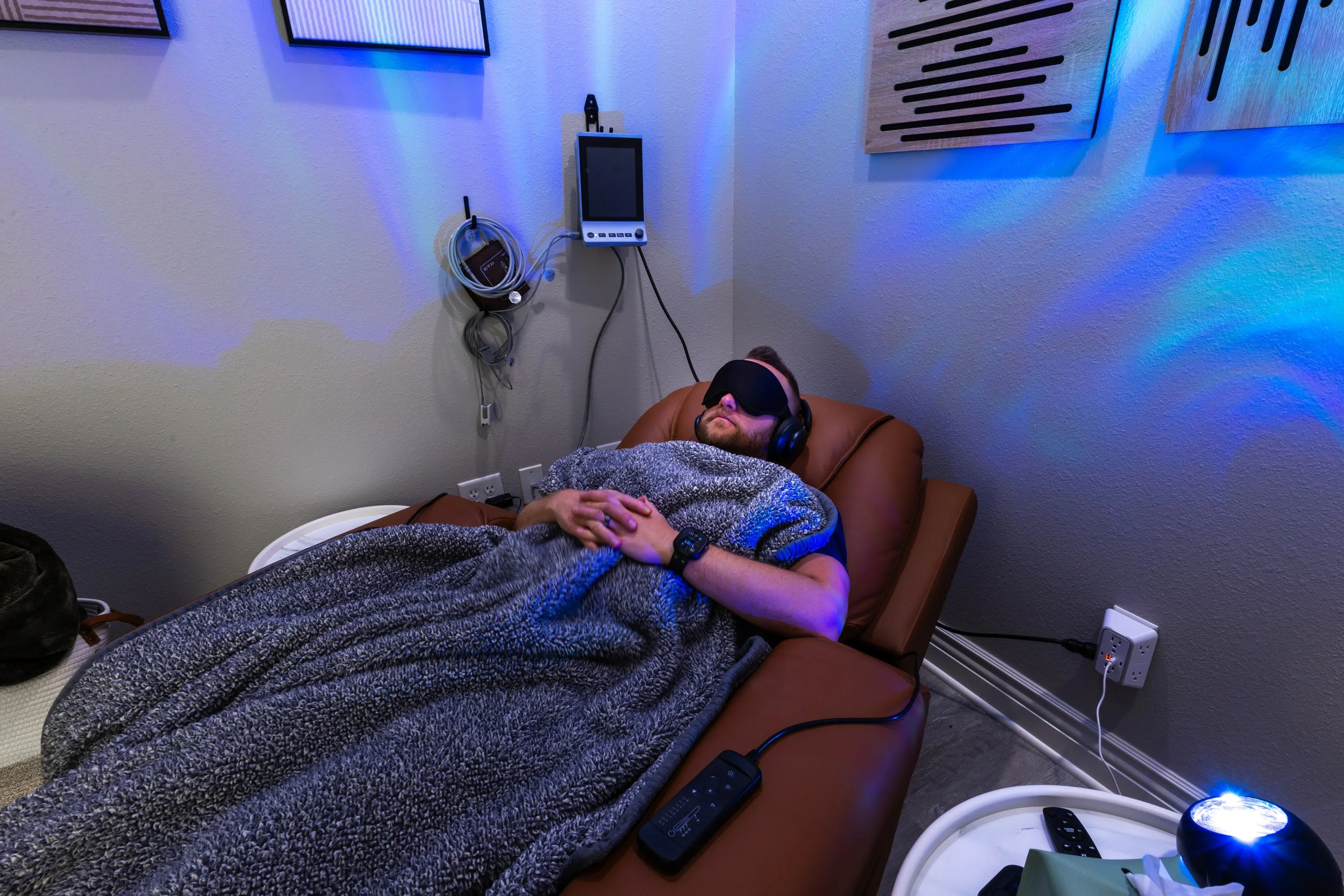
After the infusion you remain at the clinic for a recovery period. Plan to spend that extra time here rather than scheduling other activities immediately afterward.
PREPARING FOR YOUR INFUSION
A few things to sort out beforehand
Plan to arrive with enough time for your treatment and preparation.
Arrange transportation to and from home in advance.
Follow any instructions your provider gives you regarding food, fluids, andmedications prior to each treatment.
Wear comfortable clothing.
Eye masks and noise-cancelling headphones are provided by the clinic —feel free to use your own if you prefer.
Your provider’s instructions should always take priority over general information on this page.
TRANSPORTATION AFTER TREATMENT
Because ketamine can temporarily affect alertness, perception, coordination, and judgment, you must arrange for a responsible adult to drive you home after treatment. You should not plan to drive yourself to or from treatment.
Your treatment team will provide specific instructions regarding driving, operating machinery, alcohol, medications, and other activities following your appointment.
If you arrive without the required transportation arrangement, your treatment will need to be postponed.
FREQUENTLY ASKED
Common questions about IV treatment
-
Ketamine can temporarily change your perception and awareness. Some patients describe feeling detached from their body or surroundings, changes in their sense of time, or a dream-like state — commonly referred to as dissociation. Some find the experience relaxing, while others find the altered state unusual or uncomfortable. Your treatment team monitors you throughout and can respond to changes in your experience. These effects generally lessen as the medication wears off.
-
Treatment schedules are individualized. A commonly studied initial protocol for treatment-resistant depression consists of six IV infusions administered over approximately two weeks. If you respond, your provider may discuss whether additional treatments could be appropriate. Some patients benefit from less frequent maintenance treatments, while others may not require additional ketamine. There is no single maintenance schedule that is appropriate for everyone.
-
Ketamine is generally well tolerated when administered appropriately, but side effects can occur — including temporary changes in blood pressure or heart rate, dizziness, nausea, headache, drowsiness, changes in perception, dissociation, blurred vision, vivid dreams, temporary changes in cognition or coordination, increased salivation, unusual taste, muscle twitching, and changes in appetite, urination, or bowel habits. Less common or more serious effects can include allergic reactions, significant respiratory depression, severe changes in blood pressure or heart rate, and hallucinations.
-
IV placement may cause temporary discomfort, bruising, swelling or infiltration around the site, irritation, or infection. Please tell your treatment team if you experience significant pain, swelling, redness, or discomfort around the IV site.
-
Ketamine has a long history of medical use, but “safe” does not mean “risk-free.” Psychiatric ketamine treatment should involve appropriate patient screening, informed consent, careful dosing, monitoring during treatment, and follow-up afterward. Your provider will consider your psychiatric history, medical conditions, current medications, substance-use history, blood pressure, and other relevant factors before determining whether treatment is appropriate.
-
The first step is a comprehensive psychiatric evaluation with one of our psychiatric APRNs, also known as Psychiatric Mental Health Nurse Practitioners (PMHNPs). Your provider will review your psychiatric history, current symptoms, previous treatments, medical history, risk factors, and treatment goals, and will discuss potential benefits, possible risks, alternative options, and what to expect during and after an infusion. Read more about ketamine therapy.
IMPORTANT
The information on this page is provided for educational purposes and is not intended to replace individualized medical advice, diagnosis, or treatment. Ketamine treatment is not appropriate for everyone. Your provider will determine whether treatment is appropriate based on your individual medical and psychiatric history. Your provider’s instructions should always take priority over general information on this webpage.
Questions about IV treatment?
Our team can answer questions about the evaluation process, treatment options, scheduling, and what you can expect duringyour visit.